Real estate trends to follow in 2022
GREENVILLE, NC (Stacker.com) – To say that the real estate market has changed and evolved over the past year would be a slight understatement. In the last 365 days, house prices have skyrocketed. Homeowners’ home values have continued to climb. The competition for housing was extremely fierce. Investors are snapping up real estate in all markets – big and small. Buyers who would normally be able to secure homes are priced left and right.
The year 2021 is coming to an end, the uptrend in home purchases caused by the pandemic continues. Homes are still selling well above asking price in most markets despite being in a historically weak season for real estate. Buyers are still struggling to find homes in most markets. Cash purchases dominate. Most markets are still confronted with extremely low housing stocks. And real estate values are still skyrocketing for the lucky homeowners who managed to secure ownership.
With so many unusual trends in the housing market, what will happen to real estate in 2022? Will the markets keep burning? Will the pandemic continue to fuel interest rates? Perhaps most importantly, what will be the dominant real estate trends of the next year – and why?
To answer these burning real estate questions, rent-to-own platform ZeroDown has compiled a list of 10 real estate trends to follow in 2022, using information from realtors, forecasting models, brokers and other real estate experts. Here’s what this information revealed about next year’s real estate trends.
1 / 10hacohob // Shutterstock
Industrial real estate continues to be in high demand
E-commerce was hugely popular with consumers even before the coronavirus, thanks to the huge popularity of retailers like Amazon and other online outlets. The shift from in-person shopping to online shopping that has occurred over the past two years has fueled rapid growth in e-commerce. In turn, there has been a huge increase in demand for industrial real estate, such as warehouses, to store all of the items that these retailers sell. After all, there has to be somewhere nearby to store inventory or shipping would take forever — and ecommerce retailers rely on perks like fast shipping to set themselves apart. Demand for more warehouse and industrial space by e-commerce companies will almost certainly continue into 2022 — and beyond, leading to more investors and businesses taking up that space.

2 / [email protected] // Shutterstock
Climate issues may affect some markets
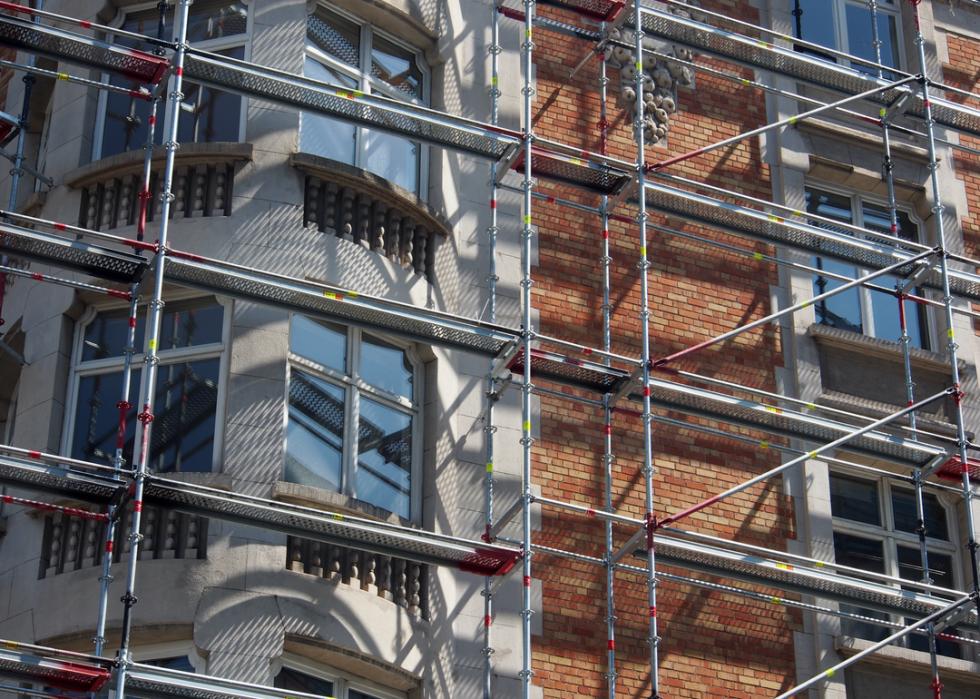
Wildfires well past the fire season, tornadoes in December, and other unusual weather events have dominated news cycles in 2021 — and there’s a good chance these unusual weather and natural disaster patterns will continue to plague the nation in 2022. So it’s likely these issues will also have a big impact on price and desirability — or even ability to fund home purchases — in certain areas. For example, beach communities have traditionally charged a premium from buyers, but in many areas, rising temperatures have left those homes at risk from hurricanes and flooding. That kind of risk could make homes in these markets a tough sell for buyers — and for lenders — pushing home prices down. This has already happened in certain parts of the nation and is likely to continue despite the hot national market.
3 / 10Finecki // Shutterstock
The revitalization efforts are in full swing
Population growth has significantly shifted from major metropolitan areas to secondary markets – and this could have a significant impact on revitalization efforts in 2022. These smaller markets were unprepared for the influx of new residents and real estate remains scarce in many areas. Therefore, it is likely that revitalization efforts in the secondary markets will be in full swing over the next year to accommodate the new residents. That means many neighborhoods in these secondary markets are becoming a gold mine for developers and investors. Older homes are being gutted or demolished to make way for new construction, and affordable neighborhoods in prime locations are becoming expensive havens for new residents. This will also change the face of communities and business parks in secondary markets across the country — which can be good or bad, depending on which side of the fence you’re sitting on.

4 / 10wutzkohphoto // Shutterstock
Rental prices continue their upward trend
Rental prices have risen rapidly since the pandemic began, and this is likely to continue into 2022. In most areas, there simply aren’t enough rental units available to meet demand, and with demand outstripping supply, rent increases are all but guaranteed. As of November 2021, national multifamily rental growth increased 13.5% year over year. In most markets, builders are working to meet demand, but rental units are not increasing fast enough to meet the increase in rental demand. And other issues, such as high building material costs and widespread supply chain issues, have made it difficult for builders to pick up the pace. In turn, rental prices are likely to continue to rise – even outpacing home value growth. For landlords, that means higher payouts, but for many renters, it means a lot more money is going towards rent — and leaving a lot less towards other expenses.

5/10 canvas
Mortgage rates can go up
Mortgage rates stayed extremely low last year, but that’s likely to change in 2022. Most experts agree that the Federal Reserve will raise interest rates at least slightly next year, meaning borrowing will become more expensive across the country, according to The Tafel. It’s impossible to predict how high they will rise, but some experts believe rates will climb to either the high 3% range or the low 4% range. That may not seem like a huge increase, but even a small rate hike can add up to a huge amount of interest on your mortgage loan. This can make it difficult for low- to middle-income buyers to afford a home purchase — especially when you factor in persistently higher home prices.

6/10CrizzyStudio // Shutterstock
Home value appreciation could be slowing
Homes have been appreciating at a rapid pace throughout 2021 – in large part because the market has been so hot across the country. But that is likely to change next year, as the rapid appreciation is likely to slow down at least somewhat. Appreciation rates were nearing 20% in mid-2021, and Fannie Mae expects a 7.9% appreciation rate for 2022, and Freddie Mac is forecasting a similar appreciation rate of about 7%. Other housing boards disagree on the rate, but almost all agree the rate of appreciation will be slower than it will be in 2021. For buyers, this means the homes they buy may not appreciate in value as quickly as they did in 2021 – but mass debasement is also unlikely to occur. Property values will continue to rise, but at a slightly more manageable pace, which could make it easier for buyers on smaller budgets to compete.

7/10 canvas
Cash transactions continue to dominate
Cash deals have taken over in 2021, with investors large and small offering to pay for homes cold, hard cash. This investment trend is likely to continue into 2022 as there is no sign of the urge for more real estate investment abating despite rapidly rising real estate prices. For some real estate professionals, this means they could be left out of the equation. Unlike regular homebuyers with mortgage loans, cash purchases don’t have to meet financing requirements like inspections, appraisals, or other home-related services in order to close the deal. This cash buying trend will continue to make the market extremely competitive for regular buyers who find it difficult to compete with cash offers.

8/10 canvas
Home auction sites are becoming increasingly popular
Last year saw incredible competition for the limited housing stock – and it’s not expected to ease next year. Therefore, it is very likely that housing offers on alternative sales platforms such as auction sites will become more common. Listing homes for auction allows sellers to take full advantage of the competitive market – and also speeds up the buying process. A boom in home auctions will also benefit investors, who can bid on real estate in any market from anywhere in the world. This will further reduce costs for investors who normally have to be present at traditional real estate deals. The only parties unlikely to benefit from this are regular buyers, who have to deal with larger buyer pools on auction sites — and even smaller amounts of regular home inventory as listings shift to alternative platforms like this one.

9/10Andy Dean Photography // Shutterstock
The housing stock remains low
Thanks to the surge in buyers during the pandemic, stocks of both existing and new homes have been extremely low throughout 2021 and will likely remain so throughout 2022. One of the main triggers for low inventory is that homeowners have been reluctant to list their homes for sale as there is no guarantee they will find an affordable home to buy – or a rental to rent. New residential construction is also not keeping pace with the increasing demand. There have been major supply chain issues that have made building materials more expensive and difficult to source. That’s unlikely to change in the next year as supply chain issues still linger and soaring home prices make it even more unlikely that current owners will sell their homes and bring more inventory to market.

10 / 10Alex Erofeenkov // Shutterstock
Commercial real estate investments are becoming mainstream
Interest in real estate investing has exploded in recent years, but those opportunities have been largely limited to specialist investors or investors with deep pockets who could afford to pour huge sums of money into projects. This playing field could level out in 2022 as commercial real estate investing becomes mainstream over the next year. Major trading platforms that once specialized in making the stock market accessible to the everyday investor have now set their sights on the real estate market. As more of these platforms begin offering trading shares of individual real estate investments, it’s becoming a lot easier — and a lot less cash — to invest. This will make a market that used to be limited to certain investor groups accessible to anyone who wants to raise the money to buy a few shares in a real estate fortune.