Affordable rental units increasingly hard to find for low- and middle-income residents | News

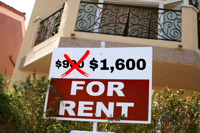
Higher rental prices, along with higher prices for gas, groceries and utilities, are straining family budgets.
Higher construction and materials costs are driving up rental prices on Guam, making affordable housing harder to find for low- and middle-income families.
Combined with price increases for gas, groceries and utilities, higher rents are straining family budgets.
A year ago, Kholanie Tanaka-Bascon a 31-year-old resident of Sinajana was paying $1,200 a month to rent a three-bedroom and one-and-a-half-bathroom single-family house with her husband and three children.
Now the family pays $1,750 a month.
“The increase in rent has affected a lot of factors in our everyday lives,” Tanaka-Bascon said. She said the family has had to cut spending on nonessential items, carefully watch their budget and adjust the ways in which they spend money.
Higher rents have become a problem across the nation. A recent analysis by the Associated Press found that the median rental cost of properties with two or fewer bedrooms rose 19.3% from December 2020 to December 2021, with the national median of rent payments at $1,781.
Unaffordable
For some on Guam, housing has become unaffordable, especially for people who work part-time hours and make less money than they did before the COVID-19 pandemic.


Deanna Palmer, an associate broker with REMAX Diamond Realty, at her office April 29, 2022, in Hagåtña.
Deanna Palmer, an associate broker and certified residential specialist at REMAX Diamond Realty, gave an example of Yigo units with three bedrooms, two baths with a carport. Before the pandemic, the 1,100-square-foot units rented for $900 a month, but now they are $1,500 to $1,600 a month.
“We have to get the job market going, the economy going and getting enough people actually full-time working hours again,” Palmer said. “We’re not there yet, and until that happens we are going to continue to have people who honestly cannot afford rent.”
The loss of the tourism industry during the pandemic reduced the number of hours many people could work. “If a family is relying on one person working 28 to 32 hours a week, that is not enough income to afford rent in the current market,” said Palmer.
Nervous landlords
This has made landlords nervous and sometimes unwilling to accept these tenants because it is too big of a risk for the owner to have a whole family move in and then not be able to pay rent, Palmer said.
Palmer said Section 8 and other government housing assistance provides short-term help for families in need, but landlords can still be wary because these tenants are required to reapply for assistance, she said.
Those who don’t qualify for government programs are hit with a “double whammy” — working fewer hours and paying higher housing costs, she said.
Construction costs
Higher costs for construction and materials are driving up prices, according to Siska Hutapea, president of Cornerstone Valuation Guam.
“Constructions costs have been skyrocketing, because of inflation, but we also have the military buildup activity that has absorbed all of the capabilities of the construction companies. So, we don’t have the capacity to do local construction,” she said.
This means no new affordable units are being built and put on the market.
Hutapea said the demand for these units is increasing, but the supply remains the same.
Inflation has exacerbated the situation, said Hutapea.
Helping residents
In Dededo, Mayor Melissa Savares said more and more residents in the village have told her rentals are no longer affordable.
“We try to help them by finding landlords who have affordable rentals. It’s not a long list,” said Savares.
She said there are residents who work two jobs to make ends meet, and most of their paycheck is now going toward rent and utilities.
“Those who are not approved for a subsidy through housing vouchers like Section 8 and have to pay rent on what finances they have. It’s difficult,” she said.