Commercial Street’s TIF fund has $489,000 to spend on improvements
Rod Pickett has owned the Blu Styles barbershop in the heart of historic Commercial Street in north Springfield for 16 years.
When Blu Styles started in 2005, the neighborhood – much of it was created during a boom in the late 19th century when the railways came to Springfield – was awakening from a spark of economic decline that lasted from the 1970s to the 2000s.
In early 2006, the officially adopted city strategy for the district stated that only 27 shops on the first floor occupied the once busy street scene. While loft residents rented apartments on the second and third floors of many buildings, business development lagged. Only 32 percent of the available properties were occupied.
Fifteen years and two global recessions on, a lot has changed. Blu Styles is a reasonably “recession-proof” business, Pickett told the news leader, and as concerns about the global COVID-19 pandemic have receded somewhat due to masking and other measures, people are more comfortable opting for haircuts. he said.
There are other signs of renewed prosperity. In the years since Pickett and his team started delivering tapers, fades, and laughs to their customers, the commercial street world has multiplied.
More:C-Street Jefferson Ave. Pedestrian bridge that will bid in July; when will repairs be carried out?
On Tuesday afternoon, the news leader counted shops, restaurants and offices on the commercial route, which lies between the White River Brewing Company in the west and Askinosie Chocolate in the east. At least 60 shop windows appeared to be active.
Meanwhile, official January city files received by the News Leader list more than 100 business establishments at least nominally linked to historic addresses on Commercial Street in the city council approved special tax hike funding district in 2008 as part of the “revitalization”. Efforts.
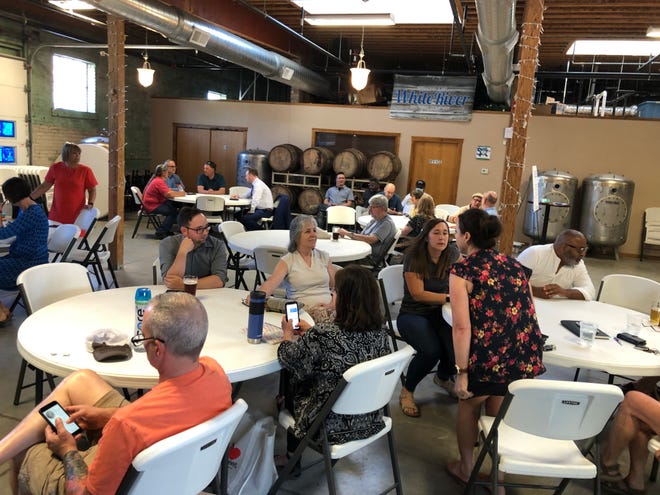
On Tuesday evening, Pickett showed up for a town meeting at the White River Brewing Company that was attended by about two dozen neighborhood stakeholders. TIF state rules require input meetings at least every year to prioritize public spending on payments rather than taxes generated by economic activity in the TIF district, Olivia City’s senior planner / brownfields coordinator said Hough.
It turns out that Commercial Street, long associated with deep poverty and homelessness in Springfield’s collective memory, has TIF money in the bank to spend on improvement. If it wants to.
According to a city press release, TIF annual revenue has increased from $ 160,000 in 2015 to $ 223,805 in 2020, faster than forecast in 2019.
The fund currently has a balance of approximately $ 680,522, of which approximately $ 489,000 may be allocated to new public improvements on a council-approved list on the TIF Commercial Street District Plan, city officials said.
Pickett said he was there to see all of the options.
The full list is long, including potential improvement points approved more than a decade ago that city planner Hough admitted might be “no longer relevant” like a commercial street-based public radio station.
But five main ideas were presented to stakeholders on Tuesday evening, four of which were opportunities that city officials said could be launched later this year. The fifth, a plan to modernize the 1920s Commercial Club building with new amenities like public toilets and a functioning elevator under the Americans with Disabilities Act, could be on the table in the future.
Another idea to build three “gates” at the entrances to the old town to mark their visual identity is promoted, but not yet under construction, according to the presentation.
More:Banter Brewing Co. is expected to open on Plainview Road in South Springfield this summer
Parking has priority
Park improvements were a major topic discussed on Commercial Street this week.
In 2017, more than $ 267,000 in TIF funds went to Commercial Street, a 35-foot strip of land north of the Commercial Street buildings between them and the BNSF railroad that runs along the street. Around 60 parking spaces have been added, which has done a lot to relieve tension between residents and business owners when parking, said Andy Walls.
Walls co-owns the Savoy Ballroom with his wife Anne Walls. You’ve lived in a loft apartment on Commercial Street for 10 years, Walls said.
He hopes that parking will continue to improve. The street is surrounded by a few public and private parking spaces, but for Walls the parking spaces are visually inconsistent, don’t always look accessible in the eyes of visitors, and have no signage.
The proposed new directional signage, square brown posters with the historic C-Street logo, could be installed to alert visitors to the neighborhood and public parking spaces. The city’s shop sign could make the signs at “reasonable” cost, and the TIF would raise $ 5,000 under the proposal tabled Tuesday.
Hough, city planner and director of economic development for the city, Sarah Kerner, also recommended two new parking lot renovations Tuesday night that could use Commercial Street TIF money.
One on the northeast corner of Campbell Avenue and Pacific Street would be redesigned, repaved and given new lighting, landscaping, and irrigation at a cost of $ 325,000, of which $ 130,000 could be funded by TIF.

Another, on the southeast corner of Robberson Avenue and Pacific Street, would get the same treatment at a cost of $ 270,000. Since the same 60:40 share of the cost is suggested, the Commercial Street TIF could pay $ 100,000 for the renovation.
Public art and plaza upgrades
In a third proposal, with a budget of $ 40,000, Commercial Street could invest in more public art in two ways. It could become part of Sculpture Walk Springfield, a non-profit “museum without walls with access for all” that began installing sculptures in downtown Springfield in 2016.
Sculpture Walk installs new temporary pieces every 18 months. Commercial Street would receive two sculptures under this proposal. Or it could buy or commission two permanent works of art.
Another proposal for 2021 was to create a new design for Jefferson Avenue Footbridge Plaza at a cost of $ 15,000, with construction to be funded separately later. This would improve walkways, lighting, a better sound system, and more landscaping.
This proposal would be separate from years of efforts to repair the actual Jefferson Avenue pedestrian bridge, which, according to previous News Leader reports, has been fenced off at its entrances for about five years.
The budget for this project is $ 3.2 million, City Transportation Engineer Andrew Flippin said Wednesday, and it is completely unrelated to the TIF funds generated by Commercial Street. A mix of city and federal funds would pay for the bridge to be repaired, with federal land transportation funding raising at least $ 2 million, Flippin said. The nonprofit Commercial Club donated around $ 50,000 to the bridge, Flippin added.
City planner Hough congratulated those involved on the success of Commercial Street to date.
“I’m seeing a lot of new people today and you should really be proud of what you’ve done,” she said.
The city is offering the public the opportunity to express their opinion on Commercial Street’s TIF funding priorities by completing an online survey available through June 29 at springfieldmo.gov/ecodev.
Ultimately, the city council would make a decision about spending TIF funds based on recommendations from Commercial Street stakeholders and city officials.
Contact News Leader reporter Gregory Holman by email at [email protected]. Please consider subscribing to support important local journalism.