
Industrial real estate in Edmonton area ‘surging’: report
Breadcrumb Trail links
“Because we’ve got a shortage of commercial properties, that’s starting to spur on new development, which is very exciting.”
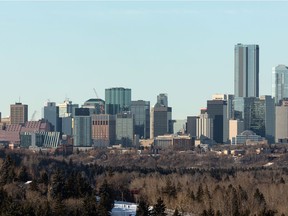 The Edmonton Chamber of Commerce encourages employers to adopt return-to-office plans, which in turn fuel business for shops and businesses in the core. Photo by Ian Kucerak /Postmedia, file
Article content
The industrial real estate market is “surging” in and around Edmonton, a new market report says.
Advertisement 2
This advertisement has not been loaded yet, but your article continues below.
Article content
Meanwhile, office vacancies continue to climb as the retail market makes a slow return.
By clicking on the sign up button you consent to receive the above newsletter from Postmedia Network Inc. You may unsubscribe any time by clicking on the unsubscribe link at the bottom of our emails. Postmedia Network Inc | 365 Bloor Street East, Toronto, Ontario, M4W 3L4 | 416-383-2300
Thanks for signing up!
Article content
The occupancy rate in Edmonton’s industrial market increased to a 96.4 per cent occupancy rate in the third quarter of 2022, NAI Commercial Real Estate said in the report, adding that land availability and prices are attracting investment from BC, where rental rates are double that seen in the Edmonton market and industrial vacancy is at a 0.2 per cent.
Some of the greatest gains were found south of the city in Leduc and Nisku, but that still benefits the region, said Jeffrey Sundquist, president and CEO of the Edmonton Chamber of Commerce.
“This is why regional collaboration is so critical,” Sundquist told Postmedia, adding that municipalities can benefit from breaking down the “virtual barriers” that separate them. “Those businesses create jobs and economic prosperity that filters back into the city proper through various ways including night life, retail shopping, dining, transit, festivals and more.”
Advertisement 3
This advertisement has not been loaded yet, but your article continues below.
Article content
‘They want to be near the action’
Industrial vacancy rates in the greater Edmonton area have been steadily declining from the last/fourth quarter of 2021 (4.6 per cent) to the third quarter of 2022 (3.6 per cent), the report said, with some of the greater gains found south of the city
The report recognized Leduc as a “major beneficiary” in the industrial surge with a vacancy rate last quarter of 4.7 per cent, down from 6.3 per cent over the same period.
For the City of Leduc, oil and gas supply and service continues to be the main driver behind the trend, economic development manager Harold Wilson told Postmedia.
-
Commercial real estate bounce-back in Edmonton as office vacancy climbs
-
Edmonton commercial real estate market hits $1.46B in sales mid-2022: report
It’s one of the mainstays besides proximity to the airport, the Queen Elizabeth II Highway and an upcoming 65 Avenue interchange to link to the corridor, he added.
Advertisement 4
This advertisement has not been loaded yet, but your article continues below.
Article content
“They want to be near the action or in that sector because there may be some great suppliers to them as well,” he said. “Some of them might even know there are customers in the neighborhood, so that would be a draw.”
Moreover, the lower vacancy has spurred new commercial development, he said, adding that the city has already seen $20 million worth of industrial permits in 2022 — double last year’s figure.
An opportunity for residential space
The office market, on the other hand, has seen better days given fallout from remote work during the COVID-19 pandemic, the report said.
The reported vacancy rate for the greater Edmonton area was at nine per cent in the last quarter of 2021 and gradually climbed to 9.6 per cent in the third quarter of 2022. The same happened in Downtown Edmonton, where the rate climbed from 10.1 per cent to 11.7 per cent, and from 14.5 per cent to 15.2 per cent in the University and Garneau area.
Advertisement 5
This advertisement has not been loaded yet, but your article continues below.
Article content
Sundquist said the trend is concerning, but the chamber remains hopeful.
The chamber encourages employers to adopt return-to-office plans, which in turn fuel business for shops and businesses in the core, he said, but as rates continue to climb the area needs to be investment ready.
“That means ensuring our Downtown is clean, safe and easy to move around in,” he said, adding that the city still has work to do in that respect. “Prioritizing spending on infrastructure repair and ensuring we get the very basics done exceptionally well aids in securing investment from businesses and companies outside of our city.”
The city could also consider adapting Downtown office towers for residential use, he said, adding that the chamber is asking council to encourage incentives for the pivot.
Advertisement 6
This advertisement has not been loaded yet, but your article continues below.
Article content
“A transition to increased residential dwellings brings with it an influx of people and that is critically needed in order to recover and revitalize the core,” he said.
‘Starting to trace new development’
The greater Edmonton area has seen a slower bounce back in the retail market with a 4.3 per cent vacancy rate this quarter compared to 4.8 per cent in the last quarter of 2021, the report said.
NAI president Chad Snow said the trend points to a coming recovery in the capital with a greater demand for brick-and-mortar stores for the type of products people prefer to buy in person.
Again, Leduc stood out in this field with a vacancy rate that fell from 4.1 per cent to 1.2 per cent over the same period.
Similar to the industrial market, Wilson said a higher occupancy rate is fueling projects in turn, and the city has already seen triple the value of commercial permits compared to 2021.
“Because we’ve got a shortage of commercial properties, that’s starting to spur on new development, which is very exciting,” he said.
@hamdiissawi
Share this article on your social network
Advertisement 1
This advertisement has not been loaded yet, but your article continues below.
Comments
Postmedia is committed to maintaining a lively but civil forum for discussion and encouraging all readers to share their views on our articles. Comments may take up to an hour for moderation before appearing on the site. We ask you to keep your comments relevant and respectful. We have enabled email notifications—you will now receive an email if you receive a reply to your comment, there is an update to a comment thread you follow or if a user you follow comments. Visit our Community Guidelines for more information and details on how to adjust your email settings.